
It’s 4:37pm.
Someone is asking for a snack. Again.
You open the fridge, stare at a collection of “bits”, and close it as if something might rearrange itself if you give it a minute.
This is the moment dinner becomes a problem.
Not because cooking is hard — but because deciding is.
And when you’re already tired, that decision feels disproportionately heavy.
So instead of solving dinner every day… you solve it once.
Stop Deciding Every Day (This Is the Shift That Changes Everything)
The real drain of feeding a family isn’t the cooking.
It’s the constant deciding.
What do we have?
What will they eat?
How long will this take?
Repeat that thought loop every evening and it’s exhausting.
Instead:
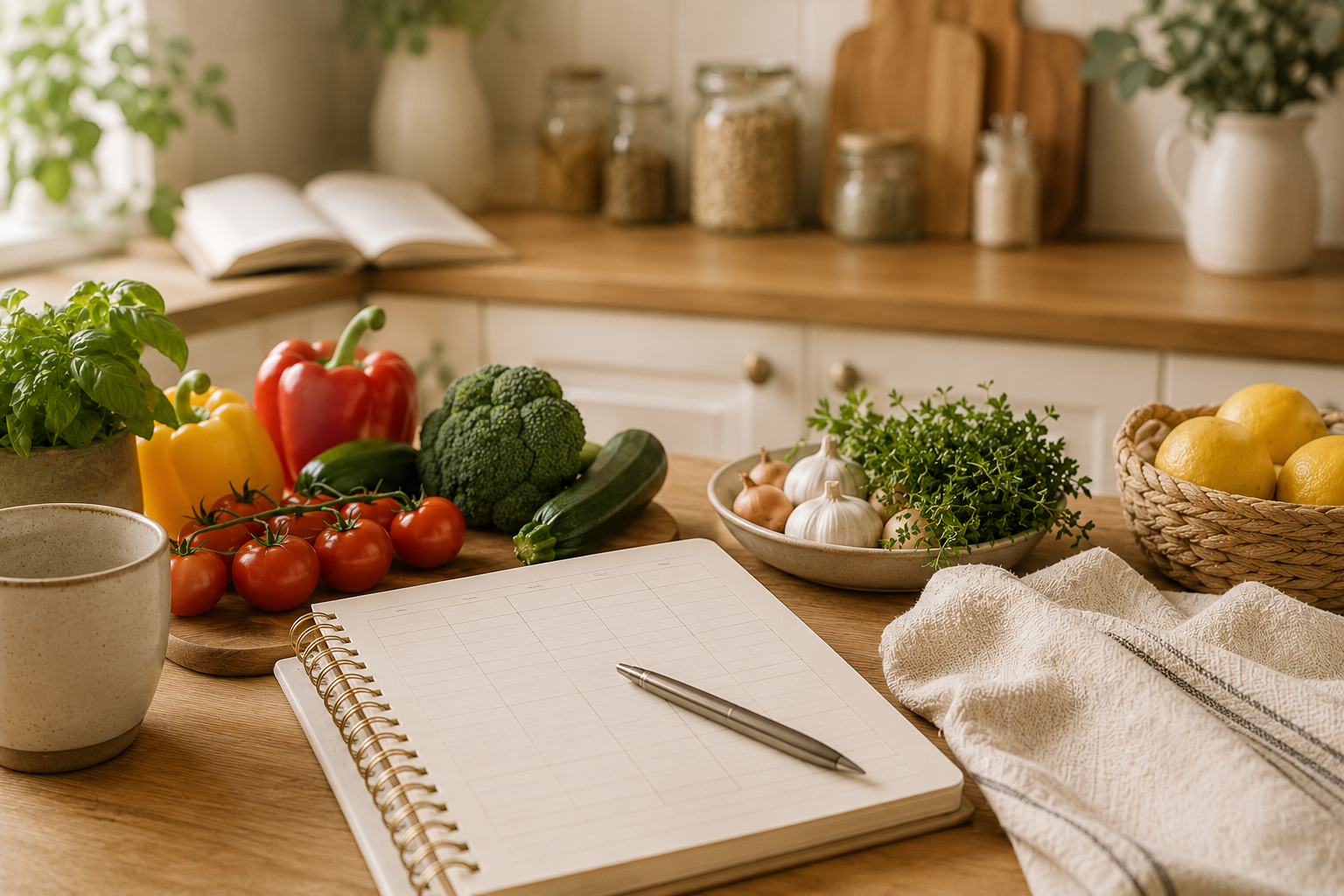
👉 Spend 10 minutes once a week deciding your dinners.
That’s it.
No apps. No elaborate plans. Just a short list written somewhere visible.
When 4:37pm arrives, the decision has already been made.
A Simple Week of Family Dinners (You Can Copy This)
If you need a starting point, here’s a realistic week:
Monday – Pasta with tomato sauce, frozen peas, grated cheese
Tuesday – Chicken thighs with roasted vegetables (one tray, 40 minutes)
Wednesday – Egg fried rice with frozen veg and eggs (15 minutes)
Thursday – Slow cooker chilli (prep in the morning, ready by evening)
Friday – Wrap or naan pizzas (everyone builds their own)
These are not impressive meals.
They are reliable meals.
And in a busy home, reliability matters more.
Start With What You Already Have
Before planning anything, do a quick scan:
- What needs using up?
- What’s about to go off?
- What have you forgotten about?
Plan your first 1–2 meals around those ingredients.
This small habit:
- reduces food waste
- saves money
- and makes your shop smaller and simpler
Keep a “Meals We Actually Eat” List
Open your notes app and start a list:
“Dinners everyone eats”
Every time something works — add it.
Over time, you’ll build 15–20 go-to meals.
At that point, meal planning becomes:
👉 choosing, not thinking
Which is exactly what you need when life is full.
Plan for the Nights It Falls Apart
Some evenings won’t go to plan.
That’s not failure — that’s real life.
So build in backup options:
- Beans on toast
- Scrambled eggs
- Soup and bread
- Jacket potatoes
These are not giving up.
They are part of a system that expects real life to happen.
A Calmer Way to Run a Kitchen
A well-run kitchen isn’t about cooking elaborate meals.
It’s about removing friction.
Making fewer decisions.
Using what you already have.
Knowing what’s coming next.
Because when dinner stops being a daily question…
the whole evening feels different.
➡️ Want the deeper rhythm behind this?
I write about the thinking behind running a calm, well-fed home over on Substack — the parts no recipe really captures.
Leave a Reply