
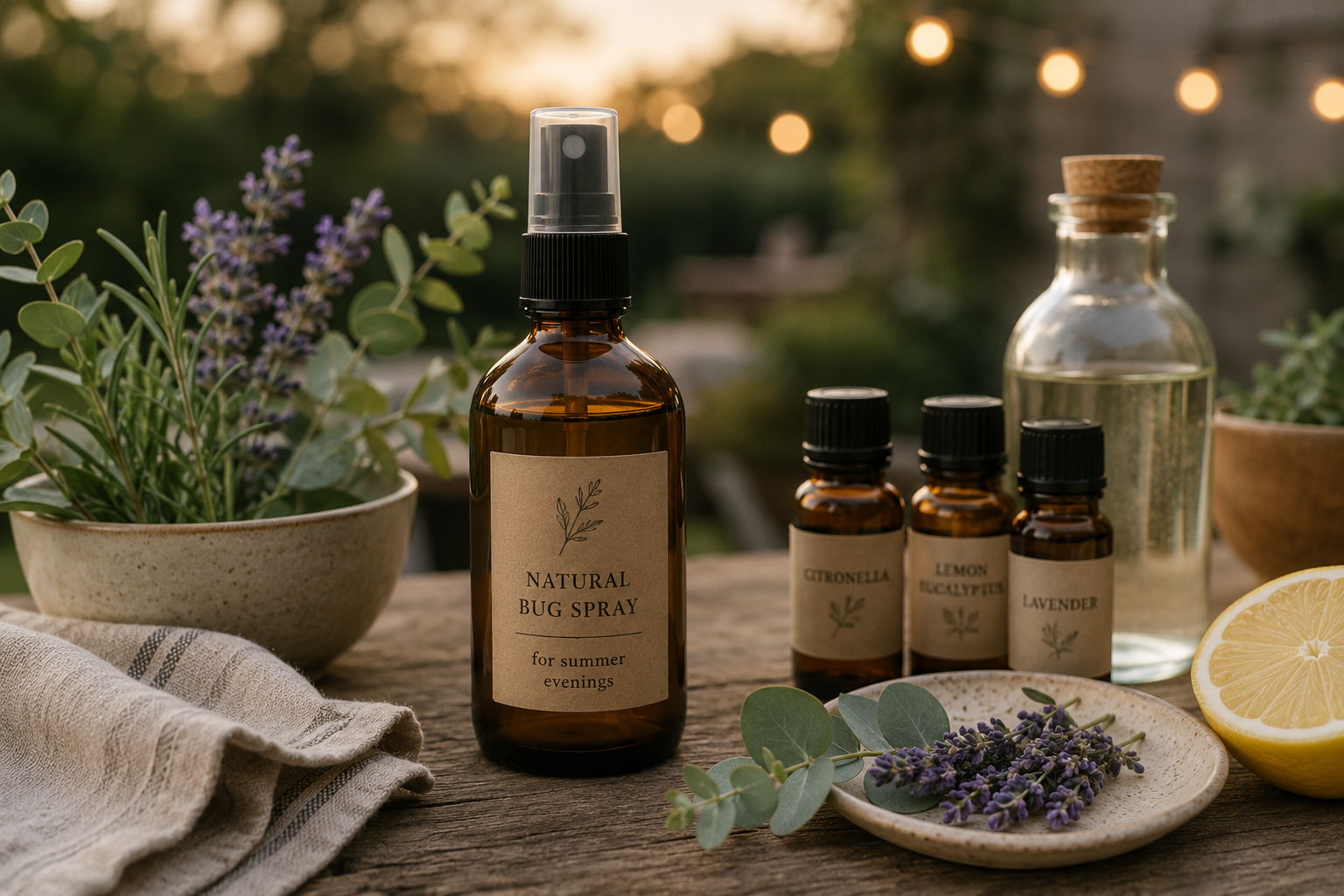
There is a particular kind of summer evening that feels almost impossible to recreate once childhood has passed.
Windows open long after dinner.
Children still barefoot in the garden.
The sound of bees fading into dusk.
A soft breeze moving through the house.
And then, inevitably, the mosquitoes arrive.
For many families, bug spray becomes part of summer almost by default — tossed into picnic bags, sprayed before evening walks and layered onto children before garden dinners or camping trips.
But conventional bug sprays are often heavily fragranced and filled with ingredients many people would rather avoid using daily around their homes and children.
Natural bug spray offers a gentler alternative.
Not perfect.
Not entirely mosquito-proof in every circumstance.
But often more than enough for slow summer evenings spent outdoors.
And perhaps that is the heart of modern homemaking — not eliminating every inconvenience entirely, but finding softer ways to move through ordinary life.
Why People Are Turning to Natural Bug Spray
In recent years, many households have become more conscious of:
- synthetic fragrances
- aerosol sprays
- harsh chemical ingredients
- heavily perfumed household products
This is especially true during pregnancy, around young children or when trying to create a lower-tox home environment overall.
Natural bug sprays typically use:
- witch hazel
- essential oils
- distilled water
- apple cider vinegar
to create a lighter, more botanical alternative to commercial insect repellents.
Many people also simply prefer the experience of using them:
- fresher scent
- reusable bottles
- less sticky residue
- gentler atmosphere around the home
The Truth About Natural Insect Repellent
It is important to be realistic.
Natural bug sprays are often best suited to:
- evening garden use
- picnics
- gentle countryside walks
- outdoor dining
- everyday summer living
They may not perform as strongly as heavy-duty commercial repellents in:
- tropical climates
- areas with high mosquito activity
- long hikes
- travel situations requiring stronger protection
And that is perfectly okay.
Homemaking is not about turning every homemade product into a flawless replacement for industrial formulas. Sometimes it is simply about choosing gentler options where they make sense.
A Simple Natural Bug Spray Recipe
This easy homemade bug spray uses botanical ingredients traditionally associated with insect-repelling properties.
Ingredients
- ½ cup witch hazel
- ½ cup distilled water or apple cider vinegar
- 20 drops citronella essential oil
- 20 drops lemon eucalyptus essential oil
- 10 drops lavender essential oil
- 10 drops cedarwood essential oil
- ½ teaspoon vegetable glycerin
Optional:
- rosemary essential oil
- geranium essential oil
- tea tree essential oil
Method
- Pour the witch hazel into a clean glass spray bottle.
- Add the essential oils and vegetable glycerin.
- Top with distilled water or apple cider vinegar.
- Shake well before each use.
- Store in a cool, dark place.
How to Use Natural Bug Spray
Spray lightly onto:
- exposed skin
- clothing
- hats
- socks
- picnic blankets
Avoid:
- eyes
- mouth
- broken skin
Reapply regularly, especially during warm evenings outdoors.
Essential Oil Safety Notes
If using homemade bug spray around children or during pregnancy, essential oil safety matters.
Some oils are not recommended for:
- babies
- very young children
- pregnancy
- sensitive skin
Always:
- dilute correctly
- patch test first
- research oils carefully
- avoid overuse
For younger children, many parents prefer spraying:
- clothing
- pram covers
- hats
- outdoor fabrics
rather than applying directly onto skin.
Creating Summer Rituals Around the Home
One of the loveliest things about seasonal homemaking is how small rituals begin to shape family memories.
A jug of lemon water on the table.
Candles lit at dusk.
Fresh sheets drying outdoors.
A bottle of homemade bug spray by the back door.
These tiny details become part of the emotional atmosphere of a home.
Not because they are perfect or aesthetic for the sake of appearance, but because they help everyday life feel slower, calmer and more connected to the season itself.
What Makes Homemade Products Feel Different
Many people notice that homemade seasonal products create a different relationship with the home.
You begin using:
- glass bottles instead of disposable packaging
- herbs and citrus instead of synthetic fragrance
- slower preparation instead of impulse buying
And gradually, homemaking becomes less about consumption and more about rhythm.
That shift often matters more than the recipe itself.
Final Thoughts
Natural bug spray will not eliminate every mosquito bite of summer.
But it can become part of a gentler, more intentional way of living through the season.
A small bottle by the garden door.
A slower evening outdoors.
Children running barefoot through fading light.
Sometimes homemaking is not about controlling every part of life perfectly.
Sometimes it is simply about making ordinary moments feel cared for.
Leave a Reply