
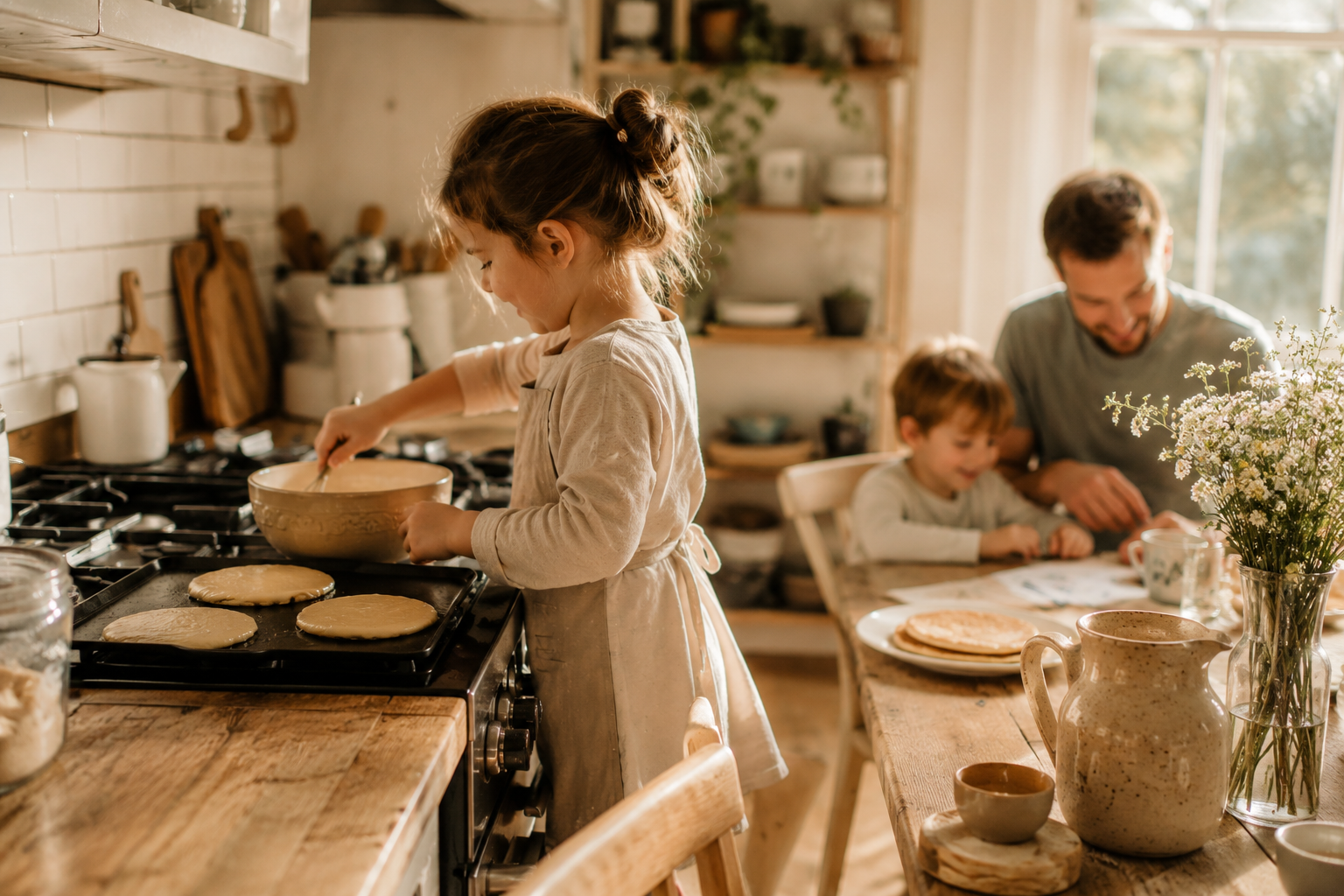
When we think about childhood memories, it is easy to imagine the big things. Holidays. Birthdays. Expensive days out. But when adults talk about the homes they loved growing up, the memories are often surprisingly small.
Fresh pancakes on Saturday mornings.
A parent singing while folding laundry.
The same soup made every winter.
Movie nights with blankets on the sofa.
The way the hallway smelled after dinner.
Children build their sense of safety and belonging through repetition. Tiny traditions become emotional landmarks in family life. They tell a child: this is home.
Why Small Traditions Matter
Children thrive on predictability. Small rituals create rhythm and stability in everyday life, even when family life feels busy or chaotic.
Research around childhood attachment and emotional wellbeing consistently shows that routines help children feel secure. But traditions go one step further — they create identity.
A family tradition says:
- This is what we do.
- This is how we care for one another.
- This is what matters here.
And importantly, these rituals do not need to be perfect or expensive to become meaningful.
The Tiny Traditions That Often Matter Most
Some of the most memorable family traditions are beautifully ordinary.
Saturday Morning Pancakes
There is something comforting about knowing Saturday mornings always begin slowly. Pancakes, music in the kitchen, pyjamas until mid-morning — these rhythms become deeply nostalgic for children later in life.
Bedtime Conversations
Children often open up emotionally at bedtime. A quiet five-minute chat in the dark can become one of the strongest relationship-building rituals in family life.
Seasonal Rituals
Simple seasonal homemaking traditions create a sense of rhythm throughout the year:
- Baking flapjacks in autumn
- Picking strawberries in summer
- Hot chocolate after winter walks
- Fresh flowers on the table in spring
These moments help children feel connected to the passing of time and to the home itself.
Family Meals
Family meals do not need to be elaborate to matter. Some of the most powerful memories come simply from eating together consistently.
A roast chicken on Sundays.
Pasta on Fridays.
Soup after swimming lessons.
Children remember the feeling of gathering.
You Do Not Need a Perfect Home
One of the biggest misconceptions about homemaking is that children need perfection in order to feel happy.
They do not.
Children are far more likely to remember warmth than spotless skirting boards. Presence more than presentation. The feeling of being welcomed into family life rather than constantly managed around it.
Often, the traditions children treasure most are the ones parents barely realise they are creating.
Start Small
If family life feels overwhelming, you do not need to reinvent everything. Start with one tiny rhythm.
Maybe it is:
- Pancakes every Saturday
- Popcorn and a film on Fridays
- A candle lit at dinner
- A walk after school
- Homemade smoothies every morning
The smallest traditions often become the deepest roots.
Leave a Reply