
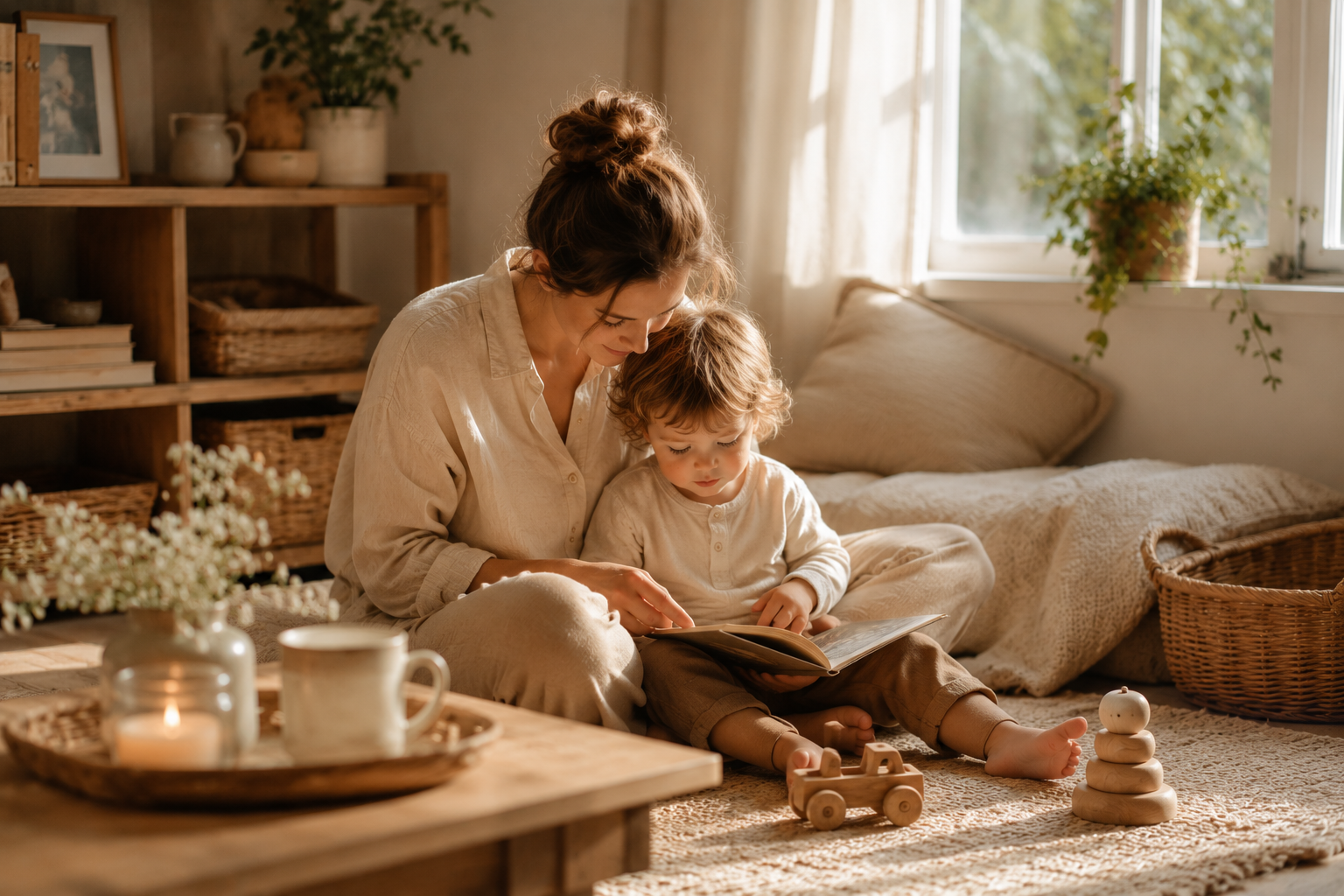
There is a certain kind of peace many parents are quietly searching for.
Not a perfectly tidy house.
Not children who never make noise.
Not productivity measured by how much fits into a day.
But something softer.
A home that feels calmer.
Children who feel emotionally safe.
A slower rhythm underneath everyday life.
I think many of us begin motherhood believing peace will arrive once we become more organised.
But over time, I have realised that peaceful family life is often created less through control and more through rhythm.
Rhythm Feels Different From Routine
Routines can sometimes feel rigid.
Rhythm feels gentler.
A rhythm allows space for:
- real life
- tired days
- changing moods
- slower mornings
- difficult seasons
Young children thrive with familiarity and predictability, but that does not mean every day needs to run with perfect precision.
Often, simple repeated anchors are enough:
- breakfast together
- outdoor time after lunch
- books before nap time
- soft music in the evenings
- lighting a lamp as daylight fades
These quiet repetitions create emotional security for children far more than perfection ever could.
The Atmosphere of a Home Matters
Children absorb the emotional tone of a home deeply.
Not just through words, but through:
- pace
- noise
- tension
- warmth
- presence
- connection
And while no home feels peaceful every moment of every day, small intentional choices can shape the atmosphere over time.
I have found that peace often lives in ordinary things:
- open windows
- gentle lighting
- slower mornings
- less background noise
- simple meals shared together
- familiar daily rhythms
These things seem small, yet together they create a feeling children carry with them.
Simplifying Childhood
Modern family life can feel incredibly overstimulating.
There is pressure to:
- do more
- buy more
- schedule more
- entertain constantly
- optimise childhood
But children often need less than we think.
Less noise.
Less rushing.
Less overstimulation.
And more:
- presence
- repetition
- time outdoors
- imaginative play
- connection
- unhurried moments
Simple childhood does not mean perfect childhood.
It simply means making room for slower, more meaningful moments within ordinary life.
Creating Gentle Daily Anchors
One of the most helpful things for our family has been creating small daily anchors rather than strict schedules.
Morning Light
Opening curtains together and allowing natural light into the home gently signals the beginning of the day.
Shared Meals
Even simple meals eaten together create consistency and connection.
Outdoor Time
Fresh air often resets everyone’s nervous systems — adults included.
Quiet Evenings
Soft lighting, books, baths and calmer activities help children transition naturally toward rest.
These rhythms become reassuring because children know what to expect.
And honestly, parents often need that sense of grounding too.
Peaceful Homes Are Not Perfect Homes
This is something I remind myself of often.
A peaceful home is not a spotless home.
It is not a home where children are silent or where every day unfolds beautifully.
Sometimes peaceful homes still contain:
- mess
- laundry piles
- difficult emotions
- overtired toddlers
- rushed mornings
But underneath those things there is still warmth.
Still connection.
Still emotional safety.
That matters far more than perfection ever will.
Childhood Is Built Slowly
So much of childhood is formed quietly through repetition.
The bedtime stories.
The favourite songs.
The smell of dinner cooking.
The feeling of being welcomed each morning.
Children remember the atmosphere of home long after specific details fade.
And perhaps creating a peaceful home rhythm is really about protecting those ordinary moments enough for them to be fully felt.
Slowing Down Where We Can
Modern life moves quickly.
But I think many families are craving permission to slow down again.
To reclaim:
- slower evenings
- unhurried weekends
- screen-free moments
- meaningful family rituals
- simple pleasures at home
Not because every moment can be peaceful.
But because creating even small pockets of calm changes the emotional rhythm of family life over time.
And often, those quiet ordinary moments become the heart of childhood itself.
Leave a Reply