
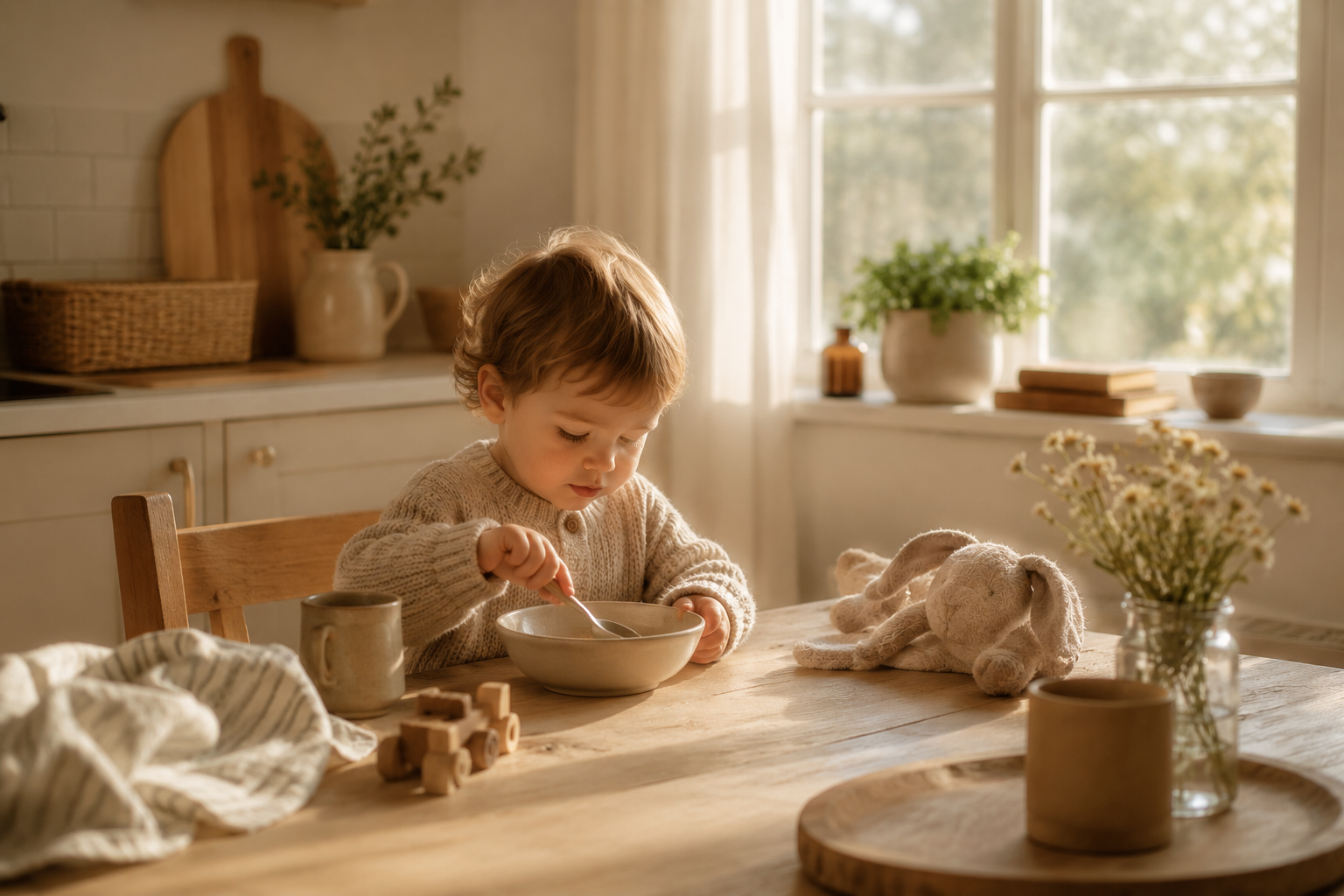
There was a time when I thought good mornings had to be productive mornings.
Wake early.
Get dressed quickly.
Move efficiently through the checklist of the day ahead.
But becoming a mother softened something in me.
Over time, I realised that some of the most meaningful moments of childhood happen quietly — often before the day has fully begun.
Warm little hands holding breakfast.
Morning light filling the kitchen.
Books scattered across the floor.
The sound of slow conversation before the world feels busy.
Now, I find myself craving slower mornings far more than perfect ones.
The Beauty of Starting Slowly
Toddlers naturally move through the world with curiosity and presence.
They notice:
- sunlight through windows
- the sound of birds outside
- steam rising from porridge
- tiny crumbs on the table
- the comfort of familiar routines
And perhaps there is something valuable in allowing ourselves to follow their pace, even briefly.
Slow mornings do not need to mean elaborate routines or perfectly calm children.
Often, they simply mean:
- less rushing
- fewer distractions
- softer transitions
- more connection
Creating a Gentle Morning Rhythm
One of the things that has helped our home most is focusing less on schedules and more on rhythm.
A rhythm feels softer than a routine.
More flexible.
More human.
Our mornings often include simple anchors:
- opening curtains together
- sitting quietly while breakfast cooks
- reading one or two books
- unstructured play
- stepping outside for fresh air
- music playing softly in the background
These small repeated moments create familiarity and emotional safety for children.
And honestly, for mothers too.
Why Screen-Free Mornings Feel Different
I have noticed such a difference in the atmosphere of our home when mornings begin without screens.
Everything feels calmer.
Slower.
Less fragmented.
Instead of immediate stimulation, children are given space to:
- imagine
- play
- notice
- connect
- transition gently into the day
This does not come from a place of perfection or strict rules.
Modern motherhood is demanding, and every family does what it needs to do.
But even introducing just a few calmer moments before screens enter the day can change the emotional tone of a morning significantly.
Simple Ideas for Slow Toddler Mornings
The loveliest mornings are often built around very ordinary things.
Shared Breakfasts
Even simple breakfasts feel comforting when eaten slowly together.
Warm toast.
Fruit bowls.
Porridge.
Morning light across the table.
Children rarely remember elaborate days in detail, but they often remember the feeling of togetherness.
Open-Ended Play
Simple toys tend to create the calmest play:
- blocks
- wooden toys
- sensory trays
- crayons
- books
- play dough
Without overstimulation, toddlers often settle into deeper concentration naturally.
Music & Atmosphere
Soft music instantly changes the feeling of a home.
Sometimes I light a candle in the kitchen or open windows early to let fresh air move through the house.
These small sensory details affect us more than we realise.
Going Outside Early
Even ten minutes outdoors can reset the rhythm of a morning.
Fresh air, birdsong and movement often help toddlers regulate naturally before the day becomes busier.
Childhood Is Built in Ordinary Moments
I think modern culture sometimes makes us feel that childhood must always be highly curated.
But often, the most meaningful memories are surprisingly simple:
- warm kitchens
- favourite books
- slow breakfasts
- morning cuddles
- sunlight through curtains
- hearing music in another room
The emotional atmosphere of a home shapes childhood deeply.
Not through perfection, but through repetition.
Through safety.
Through presence.
A Softer Pace of Living
Slow mornings are not about doing everything perfectly.
Some mornings still feel chaotic.
Some mornings are rushed.
Some mornings involve cereal on the sofa and everyone running late.
But I think there is value in intentionally creating small pockets of calm wherever we can.
Because childhood passes quietly.
Often in the middle of ordinary mornings we almost overlook.
And perhaps slowing down occasionally allows us to notice them a little more fully.
Leave a Reply