
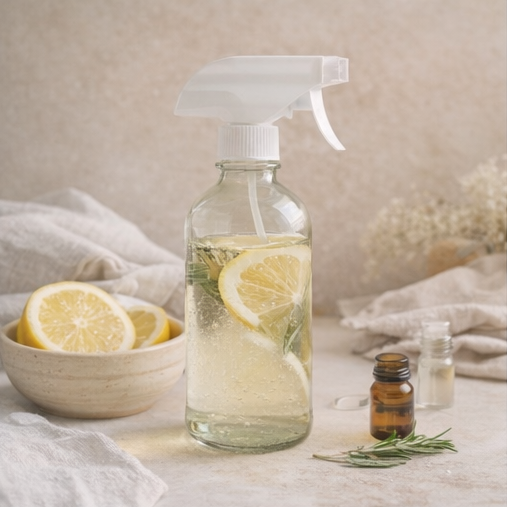
There was a point where I realised that most of the products I was using to clean my home didn’t actually sit comfortably with the way I wanted to live.
I was wiping down kitchen surfaces where food is prepared, spraying tables little hands lean on, and misting rooms where my child plays — all with products I couldn’t fully understand when I turned the bottle around and read the label.
That was the moment I started looking more closely. And what I found was surprisingly simple: you can make an effective, natural surface cleaner at home, with just a few ingredients, in under five minutes.
Here’s exactly how I make mine.
Why Make Your Own Surface Cleaner?
I came across beautifully branded natural cleaners — the kind that look gorgeous on a kitchen shelf. And I understand the appeal. But when I broke down the ingredients, I realised two things:
- The formulas are often very simple
- The cost is largely in the packaging, marketing, and convenience
That sparked a question: could I make something just as effective, safer for my family, and far more affordable — at home? The answer was yes.
There’s also a quiet satisfaction in using something you’ve made yourself. It feels grounding. A small reclaiming of autonomy in a world that constantly tries to sell us solutions we don’t actually need.
What You’ll Need
You have two options depending on what you’re cleaning and your personal preference.
Option 1: Vinegar-Based Spray
Best for: general surfaces, glass, mirrors, and tiles. Avoid on marble or granite.
- 1 cup distilled white vinegar
- 1 cup distilled water
- 15–30 drops essential oil (optional — lavender, lemon, or tea tree work beautifully)
- 1 teaspoon Sal Suds (optional, for extra grease-cutting power)
- A 16oz glass spray bottle
Option 2: Castile Soap Spray
Best for: stone surfaces like granite or marble, or if you dislike the scent of vinegar.
- 2 cups distilled water
- 2 tablespoons liquid castile soap (scented or unscented)
- 15–30 drops essential oil (optional)
- A 16oz glass spray bottle
How to Make It
- Pour your ingredients into the spray bottle (water first, then soap or vinegar, then essential oils).
- Fit the spray nozzle and give it a gentle shake to combine.
- Shake again before each use, especially if it’s been sitting.
To use: spray directly onto the surface, then wipe with a clean cloth. If using the castile soap version, go back over with a damp cloth to avoid any soapy residue.
Storage tip: Keeps for up to 4 weeks at room temperature. Use distilled water rather than tap water to extend shelf life.
What Can You Clean With It?
Both versions work beautifully on:
- Kitchen worktops and hob surrounds
- Bathroom sinks and tiles
- Kitchen and dining tables
- Door handles and light switches
- Highchair trays and children’s toys
- Glass and mirrors (vinegar version only)
Important: Do not use the vinegar-based version on marble or granite surfaces — the acidity can damage the stone. Use the castile soap version instead.
Which Essential Oil Should You Use?
Essential oils aren’t necessary for a good clean, but they add a lovely natural scent. A few favourites:
- Tea tree — antibacterial properties, fresh and clean
- Lemon or orange — bright, uplifting, and great for the kitchen
- Lavender — calming, lovely for bathrooms
- Peppermint — fresh and invigorating
If you have young children or pets at home, do check that your chosen oil is safe to use around them — some essential oils can be irritating in high concentrations.
A Small Switch That Makes a Real Difference
This wasn’t about perfection or a complete overhaul. It was about being a little more conscious — starting with one bottle, one swap, one small act of care.
Once I made the switch, I never really looked back. My cleaner works brilliantly, smells fresh rather than overpowering, and doesn’t leave me worrying about what’s lingering on the surfaces my family touches every day.
If you give it a try, I’d love to know how you get on. And if natural home cleaning is something you’re exploring further, you might also enjoy my post on making a simple natural deodorant — the same principle, the same satisfaction.
— Harper
Leave a Reply